For Schools · 15 June 2026 · Updated 12 September 2026
From Accommodation to Inclusion: building a school culture where every learner belongs
By Bartola Mavrić
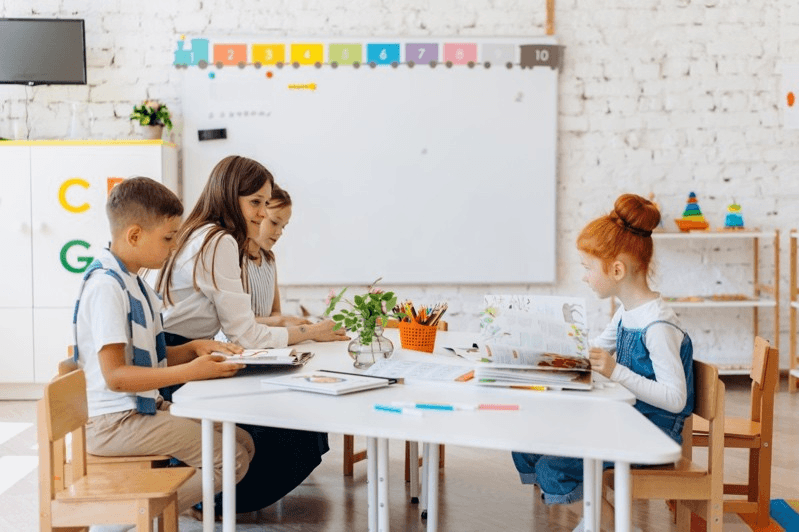
Planning for inclusion
Support plans and individual accommodations are important parts of inclusive education (Loreman, Deppeler, & Harvey, 2010). Schools also need to examine how curriculum, classroom tasks and everyday routines may create barriers to participation.
Universal Design for Learning (UDL) provides a framework for planning around differences in students' knowledge, language, interests and support needs. It asks teachers to consider access when designing learning, alongside the individual adjustments a student may still require.
The difference between accommodation and inclusion
In the accommodation model, a barrier is identified and support is introduced to help an individual student overcome that barrier.
For example:
- More time in assessments
- Reader or scribe support
- Revised tasks
- Assistive devices
- Extra adult support
Such adjustments are sometimes necessary and can significantly enhance access to learning. However, if accommodations are the norm for inclusion, schools can inadvertently create systems that work to fix students rather than removing barriers in the learning environment (Cook-Sather & Cook-Sather, 2023).
The questions frequently become:
- What does this student need to thrive?
- What intervention do we provide?
- How can we help this student fit into the system as it is?
Inclusive schools ask different questions:
- What are the obstacles in our learning environment?
- How do we design learning that is accessible from the beginning?
- What are some ways we can pre-plan and reduce the need to individualise accommodations?
These questions help schools consider individual support and changes to the learning environment together.
The reality of learner variability
One of the most important principles of Universal Design for Learning is the recognition that there is no such thing as an "average learner".
In every classroom you will find students who differ in:
- Language proficiency
- Prior knowledge
- Cultural heritage
- Motivation
- Executive function and attention
- Processing speed
- Memory
- Communication preferences
- Interests and strengths
Some learners may have identified needs. Others may not. Some will be very able but struggle with organisation. Some may be learning through a second or third language. Some may just learn differently. The reality is that there is variability in every classroom, every day. Many educational systems still design learning experiences for an imaginary average student, and then add support for those who do not fit that model. UDL challenges that thinking. Instead, it encourages designing for variability from the start, rather than designing for the average and retrofitting. Planning for this variation can help students with different needs, including those without an identified learning difficulty.
School culture and shared responsibility
Schools often ask me:
"What is the best inclusion strategy?"
"Which intervention programme should we use?"
"How can we improve differentiation?"
These are important questions. However, before any strategy can work, schools must address culture first. I have worked with schools that have tremendous resources, rich support systems, and detailed policies, and inclusion was still inconsistent. I have also worked with less well-resourced schools that had a culture of collaboration, flexibility and shared responsibility deeply embedded. The difference was not the programmes. The difference was mindset.
In inclusive schools:
- Diversity is viewed as a strength.
- Inclusion is everyone's responsibility.
- Teachers are encouraged to innovate and reflect.
- Student voice is valued.
- Collaboration is prioritised.
- Mistakes are viewed as opportunities for learning.
- Differences are expected rather than tolerated.
In schools where inclusion struggles, support often becomes concentrated within one department. Student support teams become responsible for solving every challenge. Classroom teachers may begin to view inclusion as something that happens outside their classroom rather than within it. This creates dependency rather than capacity. Sustainable inclusion requires a whole-school approach.
Universal Design for Learning: a framework for inclusive practice
Universal Design for Learning, developed by CAST, offers schools a practical framework for designing flexible learning environments that help all learners. UDL focuses on designing learning experiences that provide options and flexibility from the start, rather than creating different pathways for different kinds of students. This framework rests on three principles.
Multiple means of engagement
Learners differ in what motivates and sustains their engagement. Some thrive through collaboration. Others prefer independent work. Some are motivated by choice and autonomy, while others benefit from structure and predictability. Inclusive classrooms provide multiple ways for students to connect with learning.
This may include:
- Choice across tasks
- Opportunities for collaboration
- Real-world relevance
- Goal-setting
- Student voice
- Flexible pathways
Engagement is more than just making learning fun. It is about providing meaningful opportunities for students to connect to learning in ways that work for them.
Multiple means of representation
Students access and process information differently. Traditional teaching often relies heavily on spoken and written language. While this works for some learners, it can create barriers for others. Inclusive classrooms provide information through multiple formats, including:
- Visual supports
- Demonstrations
- Audio resources
- Graphic organisers
- Videos
- Models and examples
When information is presented in different ways, students have greater opportunities to understand and retain new learning.
Multiple means of action and expression
Learners also vary in how they demonstrate understanding. If we expect all students to show their learning the same way, we may be measuring barriers rather than knowledge.
Providing opportunities for expression can include:
- Presentations
- Written answers
- Discussions
- Projects
- Visual products
- Digital tools
- Multimedia presentations
How the same adjustment can help different learners
An adjustment introduced for one reason may help other students too. Captions on videos, for example, may support:
- Students learning English as an additional language
- Students with hearing difficulties
- Students working in noisy environments
- Students who process information better visually
Reviewing how students use these adjustments helps teachers decide what to retain, adapt or provide individually.
The critical role of leadership
Inclusive schools are not created by chance. Leadership plays a central role in shaping the beliefs, systems, and priorities that influence everyday practice.
School leaders influence:
- Continuing education
- Resource management
- Strategic planning
- Staffing choices
- School improvement priorities
The most important leaders influence culture. When leaders consistently say that inclusion is everyone's job, staff start to embrace inclusion as part of their professional identity. When leaders are curious, reflective and want to improve, that is felt through the whole school. Inclusion cannot be delegated. It has to be led.
Building sustainable change
One of the greatest challenges schools face is moving from isolated initiatives to sustainable improvement.
Many schools introduce:
- New intervention programmes
- New tracking systems
- New policies
- New training sessions
Schools need to agree who is responsible for the work, give teachers time to plan with colleagues and involve students in reviewing what helps them learn. New policies and programmes should be followed by regular discussion of classroom practice and the barriers that remain.
References
CAST (2024). Universal Design for Learning Guidelines 3.0.
Cook-Sather, A., & Cook-Sather, M. (2023). From reporting to removing barriers: Toward transforming accommodation culture into equity culture. Education Sciences, 13(6), Article 611. https://doi.org/10.3390/educsci13060611
Loreman, T., Deppeler, J., & Harvey, D. (2010). Inclusive education: Supporting diversity in the classroom (2nd ed.). Routledge.