
For Schools · 12 February 2026 · Updated 22 September 2026
Developing a STEAM curriculum in an international primary school
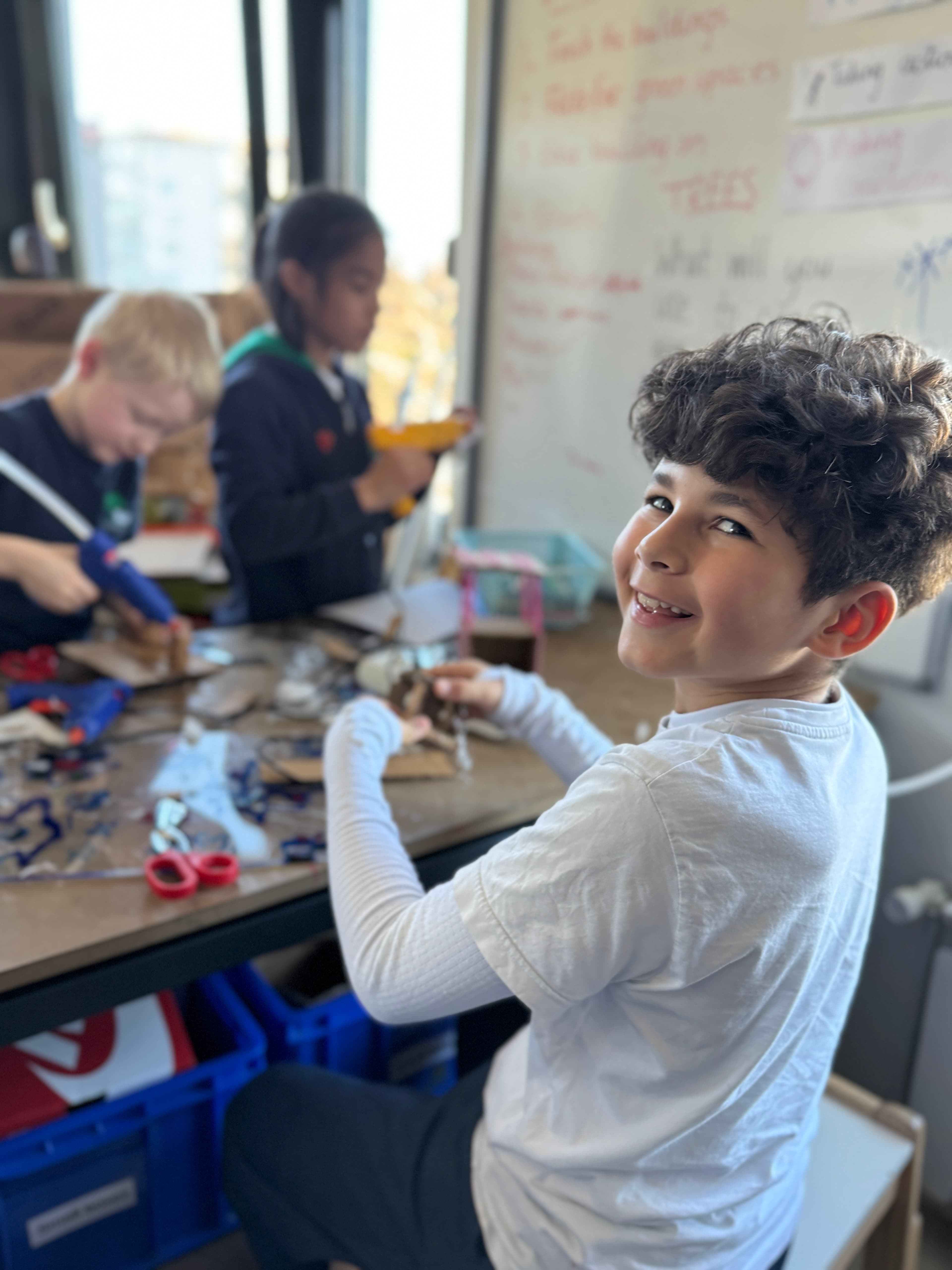
What if a school could increase student motivation, boost parent engagement and grow enrolment by 30% whilst raising academic standards rather than compromising them?
Between 2022 and 2025 the British International STEAM School in Istanbul did exactly that, by moving beyond superficial STEAM add-ons to a full curriculum transformation. This article describes the curriculum, organisational and cultural changes behind it.
Integrating STEAM across the curriculum
The challenge with STEAM in many schools is that it remains supplementary: a weekly maker session, an annual science fair, an after-school robotics club. These initiatives have value, but they don't fundamentally alter how students experience learning day to day.
True STEAM integration requires reconceptualising the entire primary curriculum as project-based and thematic, where learning objectives from multiple disciplines converge naturally around real-world challenges. The British International STEAM School in Istanbul pioneered this approach in Türkiye, becoming the country's first fully operational STEAM school where the entire primary programme is delivered through this integrated lens, building on the Cambridge International Curriculum framework.
The curriculum framework
Effective project-based STEAM learning requires robust structure. The key is creating a framework flexible enough to allow teachers and students to follow curiosity, whilst rigorous enough to ensure essential learning objectives are met.
This framework includes:
- Clear learning objectives mapped against established curriculum standards
- Thematic organisation allowing topics to be explored from multiple disciplinary perspectives
- Assessment through rubrics capturing both disciplinary knowledge and interdisciplinary application
- Space for teachers to follow student curiosity when connections naturally emerge
The framework connects subject teaching with opportunities to apply knowledge through investigation, design and practical work.
Applying subject knowledge through projects
Projects give students a reason to apply what they have learned across subjects. They may use mathematics to calculate dimensions, science to test materials and writing to explain their findings. Teachers still need to plan the subject knowledge, provide instruction and assess what each student understands.
Projects can also give students different ways to contribute and demonstrate their learning, including written work, models and presentations. The choice of task should follow the learning objective and the support students need.
Explaining the approach to parents
The most significant implementation challenge is often cultural: helping parents understand that moving beyond textbooks doesn't compromise academic standards. In fact, well-designed STEAM learning increases both rigour and relevance.
When parents see portfolios documenting learning processes, attend student exhibitions, and observe their children's increased enthusiasm, initial scepticism typically transforms into advocacy.
Using AI in project work
Where AI use is appropriate to pupils' age and the school's policies, teachers can use project work to teach students how to question an output, check information and explain their own reasoning. Activities need clear limits on permitted assistance and on the information students may enter. The teacher remains responsible for planning the learning and assessing the student's understanding.
Case Study: The British International STEAM School, Istanbul
The following account brings together the development work and the school’s reported results.
The Journey:
- 2021: Planning began from scratch with no off-the-shelf solutions
- Board support: Full commitment to comprehensive transformation including significant facility investment
- September 2022: Rebranded STEAM school opened with completely reimagined campus
- Appointed Director of STEAM School to develop the project from concept to fully operational school
Physical Transformation: The entire campus was internally remodelled:
- Vertical and horizontal zoning throughout the building
- Dedicated project rooms (maker spaces) on each floor
- Technology upgrades supporting digital learning
- Redesigned and zoned outdoor spaces
Measurable Results (2022-2025):
- 30% enrolment growth over the reported period
- Thriving Parent Association with families actively engaged in supporting learning
- Strong retention despite natural turnover from three-year international placements
- Sustainable model that continues under successive leadership teams
The Cultural Shift: The most significant achievement wasn't pedagogical but cultural. Parents moved from questioning whether their children were getting "proper" education to actively championing the approach. The thriving Parent Association evidences this transformation: families now understand that increased student motivation and self-actualisation represent gains, not compromises.
Key Lessons for International Schools
Start with the school: Build the programme around the curriculum, pupils, staff and local context.
Agree the board's support: Set out the educational aims, resources and decisions needed before implementation.
Plan the learning environment: Consider which spaces and facilities the curriculum requires. In Istanbul, this included substantial internal remodelling.
Review development over time: The school recorded 30% enrolment growth over three years. Look at enrolment alongside learning, retention and feedback from families.
Keep parents involved: Explain the curriculum, show examples of students' work and provide opportunities to discuss progress.
Planning a STEAM programme
The Istanbul project brought curriculum design, staff development, facilities and communication with parents into the same development plan. Other schools can use the account to examine their own aims, resources and starting points before deciding what to change.
For a current engagement, our STEAM curriculum consultancy sets out the scope and possible outputs. A confidential consultation establishes what the school needs.
Acknowledgements
We are grateful to the British International STEAM School Istanbul for their permission to share this transformation story. Their pioneering work continues to inspire international schools seeking authentic STEAM integration. Special thanks to Sarah Zarzo - Director of the British International STEAM School (Istanbul). In a forthcoming article Sarah Zarzo will be reflecting on the creation and development of a fully operational STEAM school.
Learn more about the British International STEAM School: www.biss.k12.tr